
Guadalest: the eagle’s nest that gets everyone out of the car
The clifftop village of Guadalest with its bell tower on the rock, San José castle, the turquoise reservoir and the museums: our guide to visiting Guadalest and dodging the crowds.
Also available in Español · Nederlands · Français

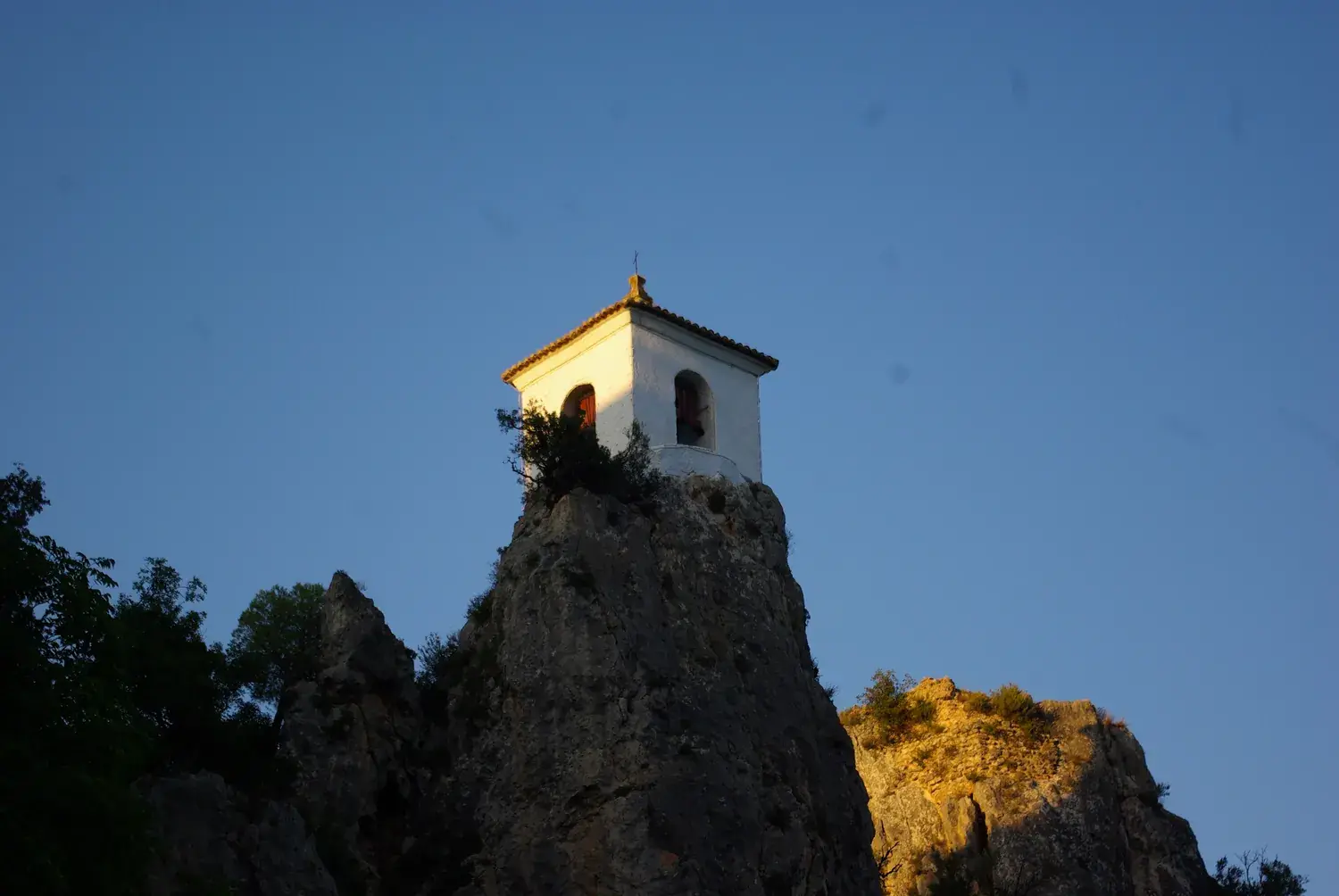
Some villages you discover; others ambush you around a bend. El Castell de Guadalest is one of the latter: a white bell tower planted on top of a rocky pinnacle, houses clinging to the cliff and, far below, a reservoir so turquoise you suspect a filter. The village has only around 280 residents, yet it draws crowds of visitors all year round: it is one of the most popular excursions on the Costa Blanca, under an hour from Benidorm.
A fortress village
Guadalest’s story begins in the 11th century, with a Moorish fortress built on these rocks to control the valley. Two earthquakes in 1644 and an explosion during the War of the Spanish Succession in 1708 destroyed most of San José castle; stretches of wall and a breathtaking panorama remain.
You enter the upper village through a tunnel carved into the rock — the only original way in, which sets the tone immediately. On the other side, cobbled lanes, little squares and craft shops lead to the Museu Municipal Casa Orduña, the former home of the Orduña family, from where you climb up to the castle and the hilltop cemetery.
The reservoir, the other star
From the top of the village, the view plunges down to the Guadalest reservoir, built between 1953 and 1971 and ringed by mountains. Its turquoise colour is spectacular, especially in late morning when the sun shines straight down on it.
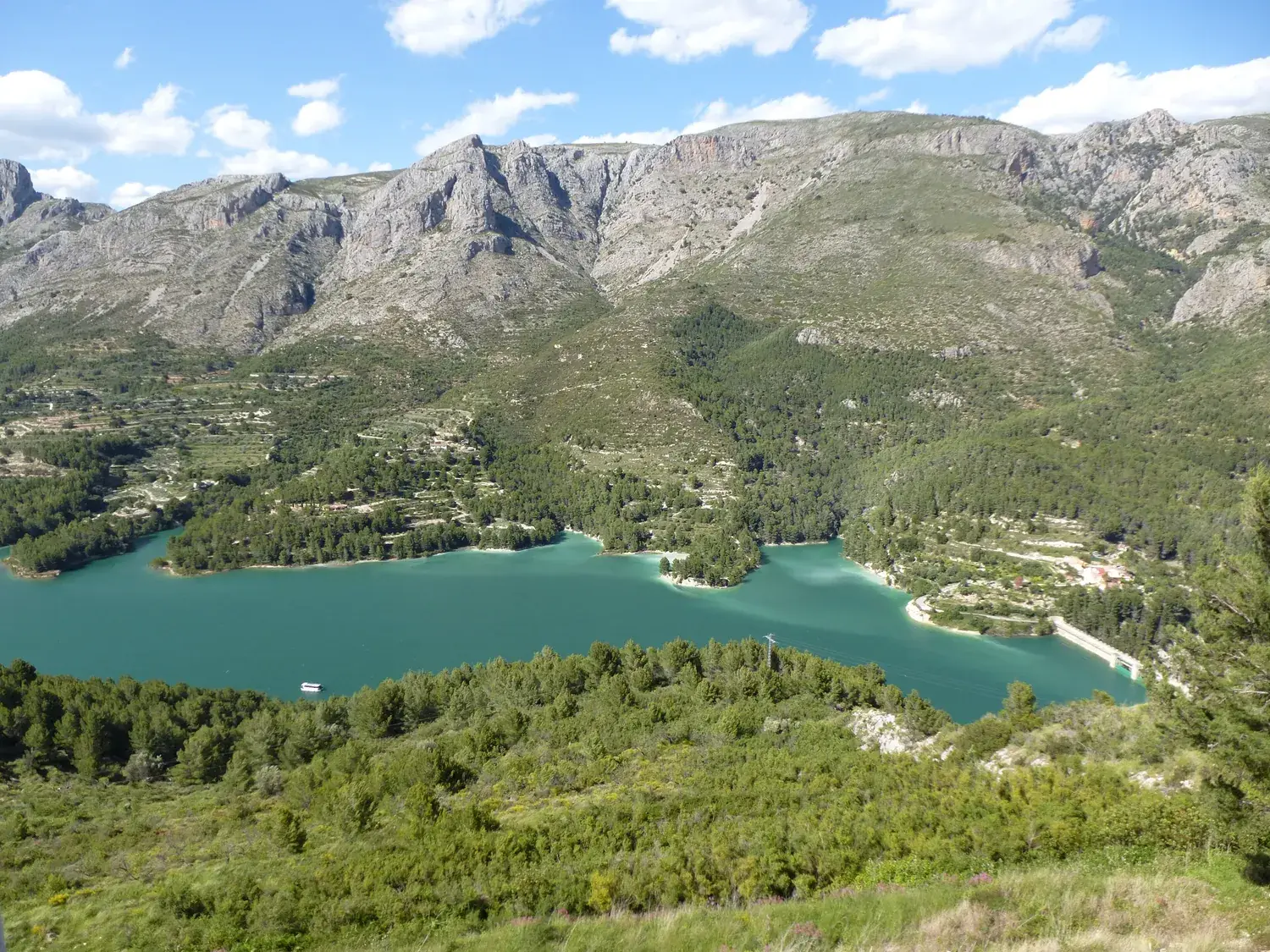
A footpath and a small road let you walk around it or head down to the dam. No swimming, though: it is a drinking-water reservoir.
The museums (yes, there are eight)
For a village of fewer than 300 people, Guadalest has a remarkable number of museums: eight, according to the town council. Alongside the Casa Orduña municipal museum and the ethnology museum, there are some more… unexpected collections: microminiatures (a sculpture in the eye of a needle, magnifying glass provided), salt and pepper shakers, nativity scenes and dolls’ houses, historic vehicles and medieval history. Children love the microminiatures; so do adults, although they claim otherwise.
Practical information
Our tips
Come early or late in the day. Around midday, coaches from the coast unload their passengers and the lanes get very narrow. At 9.30am you’ll have the village almost to yourself.
Flat shoes are a must: slippery cobbles, steps, slopes… Guadalest is not a village for heels.
Climb up to the cemetery and the castle: there is a charge, but that’s where you get the most spectacular view over the reservoir and the valley.
Make a loop through the valley: Guadalest pairs perfectly with the waterfalls of Fonts de l’Algar, about twenty minutes away, or Safari Aitana higher in the mountains.
Explore more
For the perfect contrast, head back down to the sea and the white lanes of Altea, or the Peñón de Ifach at Calpe. And if you like walking, our selection of easy walks awaits.


